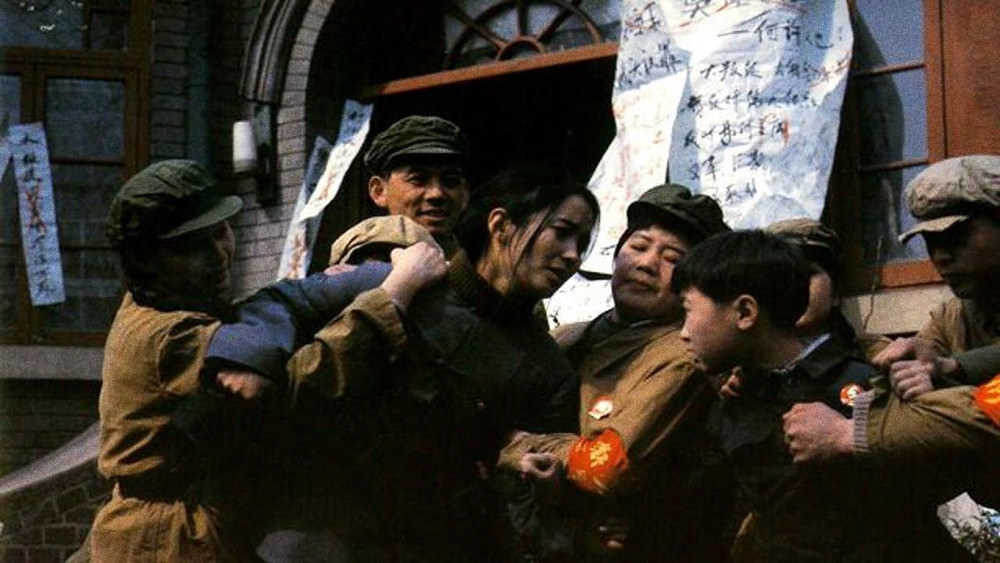
The Blue Kite (1993): China’s Turbulent History

postphx.com – “The Blue Kite,” directed by Tian Zhuangzhuang, is a 1993 Chinese drama that offers a compelling and intimate portrayal of life during some of China’s most tumultuous periods. The film, known for its sensitive depiction of personal and political struggles, provides a window into the impact of historical events on ordinary families, capturing the essence of resilience amidst adversity.

Plot Overview and Historical Context

Set in Beijing from the 1950s to the 1970s, “The Blue Kite” follows the life of Tietou, a young boy, and his family as they navigate the political upheavals of the Anti-Rightist Campaign, the Great Leap Forward, and the Cultural Revolution. Through Tietou’s eyes, the film explores the effects of these events on his family, highlighting the personal costs of political ideologies and the struggle to maintain hope and love in an oppressive environment.

Character Development and Performances

The film’s narrative is deeply rooted in the experiences of Tietou’s family, particularly his mother, Chen Shujuan, portrayed with emotional depth by Lü Liping. The characters are crafted with care, each representing different facets of the social spectrum during this era. Tietou’s journey from childhood to adolescence reflects the loss of innocence and the harsh realities faced by many during these turbulent times. The performances are understated yet powerful, emphasizing the resilience and quiet dignity of individuals in the face of systemic challenges.

Themes and Cinematic Style

“The Blue Kite” addresses themes of survival, familial bonds, and the enduring human spirit in the face of political oppression. Tian Zhuangzhuang’s direction employs a subtle and realistic style, with attention to detail that brings authenticity to the film’s historical setting. The use of the blue kite as a motif symbolizes both the fragility and endurance of hope, serving as a poignant reminder of the human capacity for resilience.

Conclusion

“The Blue Kite” is a significant work that not only offers a glimpse into a critical period of Chinese history but also resonates universally with its themes of love, sacrifice, and perseverance. Despite facing censorship and controversy, the film stands as a testament to the power of cinema to illuminate personal stories within the broader context of historical change. It remains an important cultural artifact that continues to inspire reflection and discussion on the impact of political ideology on individual lives.

CIA’s Legacy: Reflections on Power, Secrecy, and Accountability

postphx.com – The Central Intelligence Agency (CIA), since its inception in 1947, has played a pivotal role in shaping global politics and national security. Its legacy is a complex tapestry woven from threads of power, secrecy, and accountability, reflecting the agency’s multifaceted impact on the world. This article delves into the CIA’s legacy, examining its use of power, the implications of its secrecy, and the ongoing debate over its accountability.

The Power of the CIA

  1. Covert Operations and Regime Change: The CIA’s power is perhaps most evident in its history of covert operations and regime change. From the overthrow of Iranian Prime Minister Mohammad Mossadegh in 1953 to the Bay of Pigs invasion in 1961, the agency has demonstrated its ability to influence global events through clandestine activities. These operations have had lasting impacts on international relations and the internal dynamics of targeted countries.
  2. Intelligence Gathering and Analysis: The CIA’s power also lies in its unparalleled intelligence gathering and analysis capabilities. Through human intelligence (HUMINT), signals intelligence (SIGINT), and imagery intelligence (IMINT), the agency has provided critical information to policymakers, enabling them to make informed decisions on national security matters. The CIA’s role in uncovering Soviet missile deployments in Cuba during the Cuban Missile Crisis is a prime example of its influence through intelligence.

The Secrecy of the CIA

  1. Protecting Sources and Methods: Secrecy is a fundamental aspect of the CIA’s operations, necessary for protecting its sources, methods, and the safety of its operatives. This culture of secrecy, however, has also led to controversies and accusations of excessive secrecy, undermining public trust and transparency.
  2. Controversial Operations and Black Sites: The CIA’s legacy of secrecy is also marred by its involvement in controversial operations, including the establishment of black sites for detention and interrogation following the 9/11 attacks. These operations, conducted in the shadows, have raised significant ethical and legal concerns, challenging the agency’s moral compass and its adherence to international law.

The Accountability of the CIA

  1. Oversight and Reform: The issue of accountability has been a persistent challenge for the CIA. Over the years, various oversight mechanisms, including the Senate Intelligence Committee and the Inspector General, have been established to monitor the agency’s activities. However, the effectiveness of these oversight bodies has been questioned, leading to calls for greater transparency and accountability.
  2. Whistleblowers and Public Disclosures: Whistleblowers have played a crucial role in bringing the CIA’s activities to light, often at great personal risk. Figures such as Edward Snowden and John Kiriakou have exposed controversial programs and practices, sparking public debate and pushing for reforms within the agency. These disclosures highlight the tension between the need for secrecy in national security and the imperative for accountability to the public.

Conclusion

The CIA’s legacy is a reflection of its enduring power, the necessity and challenges of secrecy, and the ongoing struggle for accountability. As the agency navigates the complexities of the modern world, it must balance the demands of national security with the principles of transparency and justice. The CIA’s future will be shaped by its ability to adapt to these challenges, ensuring that its power is wielded responsibly and its operations are conducted with the highest ethical standards.